
Client-Side Encryption Explained: Why Zero-Knowledge Matters
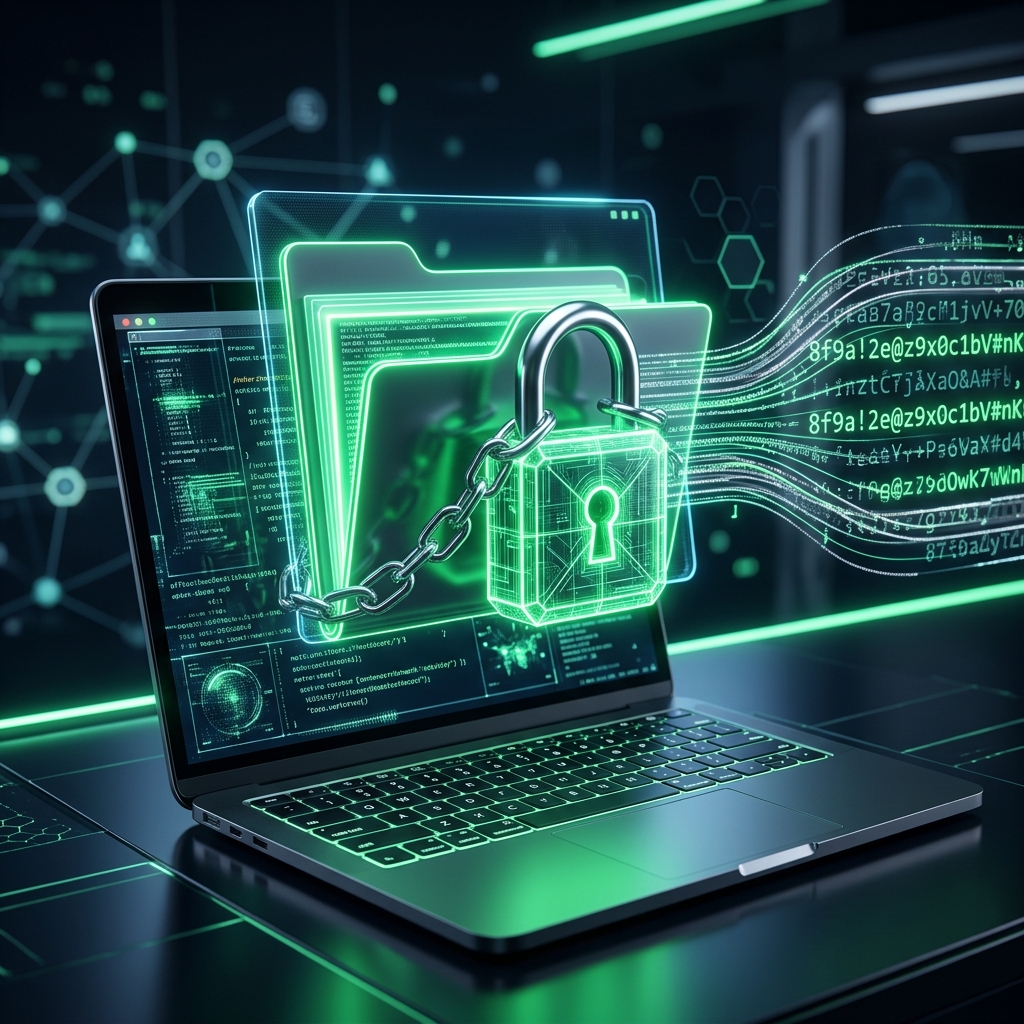
If you look at the marketing page of almost any cloud storage provider, you will see the phrase "We encrypt your data." It sounds safe. But there is a massive difference between "server-side encryption" and "client-side encryption", and that difference determines who actually owns your privacy.
The Illusion of Server-Side Encryption
When you upload a file to a standard cloud provider, the file is sent over an encrypted connection (HTTPS) and then encrypted on their servers before being saved to a hard drive.
Here is the problem: the server holds the encryption keys. This means the provider can decrypt and read your files at any time. They can scan them for advertising data, they can hand them over to governments upon request, and if a hacker steals the server's master keys, your data is compromised.
What is Client-Side Encryption?
Client-side encryption (also known as zero-knowledge encryption) flips the model. The encryption happens on your device (in your browser or app) before the data is ever transmitted over the internet.
When you use a tool like 10minbox, your browser generates a unique cryptographic key. It uses this key to scramble your file into unreadable ciphertext. Only this ciphertext is uploaded to our servers.
- We don't have the key. Because the key is generated on your device and appended to the URL fragment (which isn't sent to servers), we cannot decrypt your files. Even if we wanted to.
- Hackers get nothing. If someone breaches our database, all they will find is randomized, encrypted noise. Without the exact link containing the key, the data is useless.
- Mathematical guarantees. We use AES-256 encryption, the same standard used by governments and banks, meaning it would take a supercomputer millions of years to crack a single file.
Why Zero-Knowledge is the Future
You shouldn't have to trust a company's privacy policy to know your data is safe. You should trust the math. By using zero-knowledge architecture, we remove ourselves from the trust equation entirely.
Experience Zero-Knowledge File Sharing
Share files securely without ever trusting the server. Read our mission, or try it yourself.
Upload securely